The Big Idea
Have you ever wondered where plants get their energy? Unlike humans and animals, plants cannot walk to a supermarket or hunt for a meal. Instead, they make their own food through a natural process called photosynthesis. This amazing biochemical process happens every day in gardens, forests, and oceans all over our planet. Without it, life on Earth could not survive.
How It Works
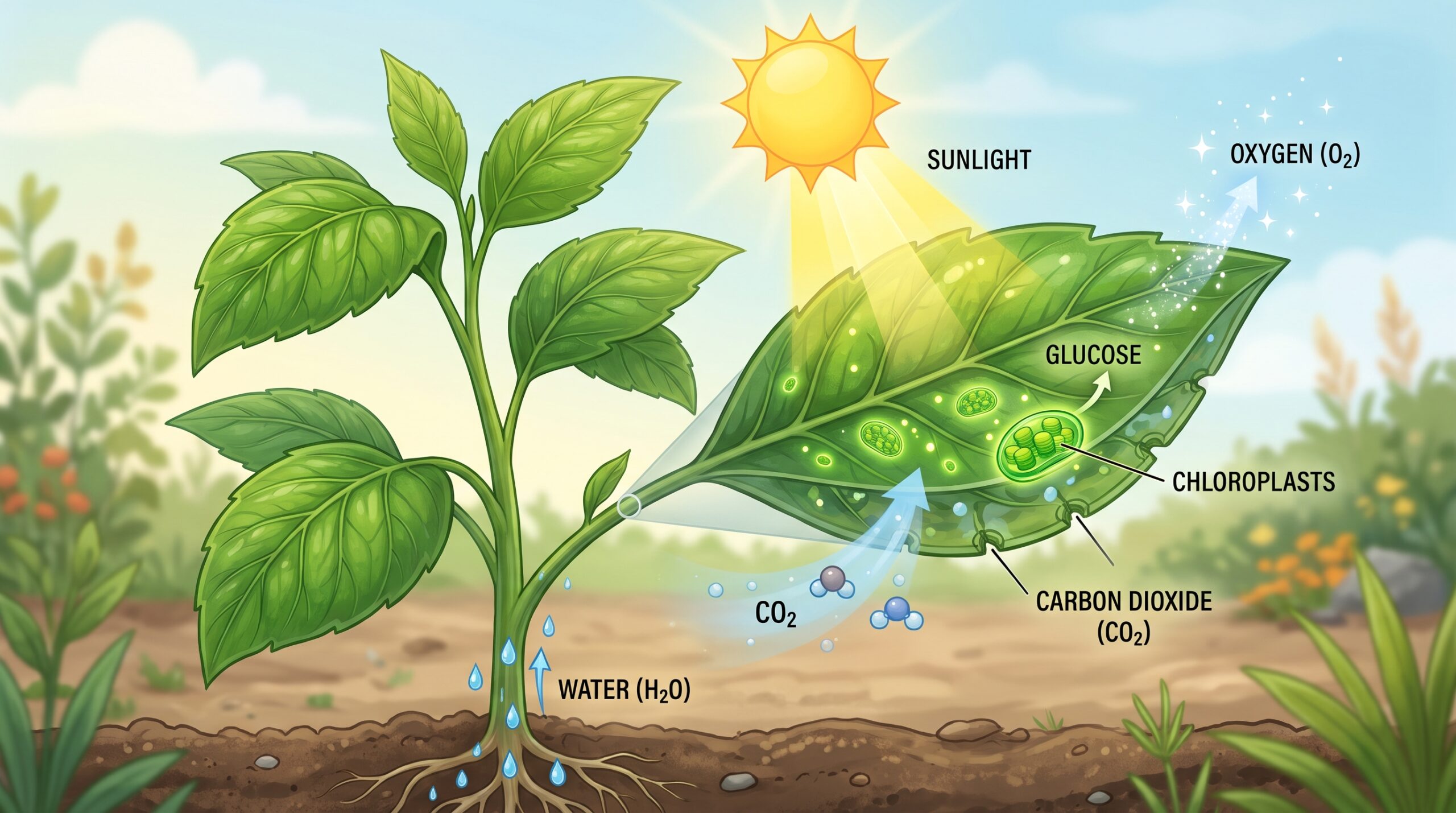
Photosynthesis needs three main ingredients: sunlight, water, and carbon dioxide gas. Plants have tiny structures inside their green leaves called chloroplasts. These chloroplasts contain a special green pigment called chlorophyll. Chlorophyll catches sunlight and absorbs its light energy. At the same time, plant roots drink water from the soil, and tiny openings under the leaves, called stomata, take in carbon dioxide from the surrounding air.
Inside the leaf, light energy triggers a chemical reaction. It breaks apart the water and carbon dioxide molecules and rebuilds them into two new substances: glucose and oxygen. Glucose is a simple type of sugar. The plant uses glucose as food to grow strong stems, pretty flowers, and sweet fruits. The plant does not need the extra oxygen, so it releases it back into the atmosphere.
Why It Matters
Photosynthesis is essential for almost every living creature on Earth. First, it cleans our atmosphere by removing carbon dioxide, a major greenhouse gas. Second, it produces the fresh oxygen that humans and animals must breathe every minute. Finally, plants form the base of every food chain. When you eat bread, vegetables, or fruit, you are eating energy that began as sunlight.
Key Vocabulary
- Chlorophyll: The green substance in plants that absorbs sunlight.
- Glucose: A simple sugar that gives plants energy to grow.
- Stomata: Tiny holes on plant leaves that let gases enter and leave.